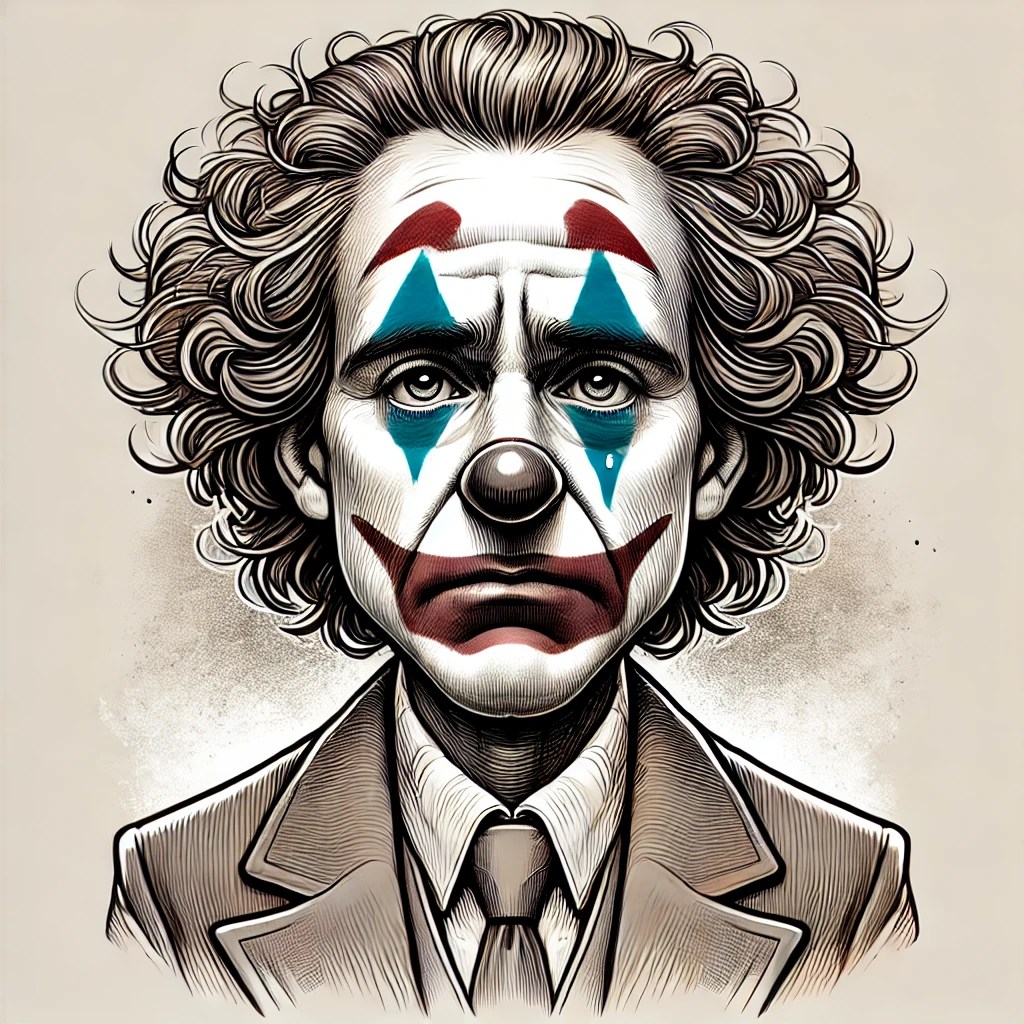
When I reflect on my long career as a relationship manager, a surprising metaphor comes to mind: The English Beat’s “Tears of a Clown.” At first glance, it may seem like a stretch—what does a song about masking personal pain with a smiling facade have to do with banking? But the longer I think about it, the more apt the comparison becomes. My professional journey has often been about performing a high-stakes balancing act, ensuring clients experience seamless service while covering for the inevitable shortcomings of banking products and solutions.
This is the story of a career spent behind the curtain, improvising, negotiating, and performing to deliver for clients. It’s a tale of optimism, resilience, and quiet triumphs, masked by a relentless smile.
The Face of Joy, The Mask of Frustration
The opening lines of Tears of a Clown set the tone: the narrator wears a mask of cheer to hide inner turmoil. In many ways, this mirrors my early years as a relationship manager. Banks, by their nature, project an image of strength, reliability, and efficiency. Clients expect seamless execution, competitive products, and immediate solutions. But behind the scenes, reality often fell short—product limitations, bureaucratic delays, and rigid policies created challenges that clients never saw.
For me, the role of a relationship manager was to embody that facade of cheer and confidence, even when I was scrambling to meet client needs. I remember a particularly difficult case early in my career: a family office client needed a custom lending solution to capitalize on a real estate investment opportunity. The bank’s underwriting process was painfully slow, and the standard product didn’t meet their needs. I spent sleepless nights coordinating between departments, negotiating exceptions, and presenting alternative solutions—all while assuring the client that we were “on it.” Like the song’s protagonist, I smiled through the stress, masking my frustration to preserve the client’s trust.
Dancing to Keep the Show Going
In the chorus of “Tears of a Clown,” the narrator describes a performance—a dance to distract from the underlying pain. As a relationship manager, this dance became second nature. Navigating the gap between client expectations and the bank’s capabilities often required creativity, adaptability, and a touch of showmanship.
There were countless instances when I had to “dance” for my clients. One memorable example was during the rollout of a new online banking platform. The bank’s marketing had touted it as revolutionary, but in practice, the system was riddled with glitches. Clients, understandably frustrated, turned to me for answers. I became the intermediary, translating technical jargon into actionable solutions, guiding them through workarounds, and reassuring them that fixes were on the way. Behind the scenes, I was escalating issues, pushing for faster resolutions, and advocating for my clients. It was exhausting, but the dance had to continue. The show must go on.
The High Wire Act of Trust Management
The most delicate part of the relationship manager’s role is trust management. Clients trust you to deliver on promises, even when the bank’s internal processes make it difficult. This balancing act often feels like walking a tightrope—one misstep, and you risk losing both the client’s confidence and your credibility within the organization.
I vividly recall a case where I was tasked with managing the banking needs of a cannabis-adjacent business. While the client was fully compliant with state regulations, the bank’s risk appetite was understandably cautious. The client needed specialized deposit and lending solutions, but internal hesitations slowed progress. On one hand, I had to assure the client of my commitment to finding a resolution. On the other, I had to navigate internal politics and advocate for a nuanced approach to risk management. It was a high-wire act, and there were moments when I felt the weight of it. Yet, like the clown in the song, I kept my outward composure, ensuring the client never felt the tension beneath the surface.
Hope for Redemption: Building Better Solutions
Despite the challenges, one of the most rewarding aspects of my career has been the opportunity to drive change with collaboration. Over the years, I’ve seen firsthand how relationship managers can influence the evolution of banking products and processes. By channeling client asks and pushing for improvements, I’ve been able to help shape innovative solutions.
One example stands out: advocating for banking for film and television composers through their performance rights organization. Traditionally, banks had been hesitant to support these artists due to the perceived risk. But we recognized the potential in these clients and worked with internal teams to develop a strategy that balanced risk with opportunity. It wasn’t easy, but seeing the final product—a tailored approach that supported these brilliant creators—was deeply satisfying. In moments like these, I felt like I was removing the clown’s mask, showing clients that their trust in me—and in the bank—was well-placed.
The Resilient Performer
As the song progresses, it becomes clear that the clown’s performance isn’t a sign of defeat but of resilience. This resonates deeply with me. My career has been defined by an ability to adapt, to find solutions where none seemed possible, and to maintain optimism in the face of challenges. This resilience has not only helped me succeed but has also earned recognition: President’s Club honors, top rankings in specialty banking, and long-lasting client relationships.
While it’s tempting to focus on the frustrations—the imperfect products, the bureaucratic hurdles—I prefer to see the bigger picture. Every challenge was an opportunity to demonstrate my value, to prove that relationship managers are more than just salespeople. We are problem-solvers, advocates, and, yes, performers, ensuring that clients feel supported even when the odds are against us.
A Legacy of Silent Triumphs
As I approach the next chapter of my career, I find myself reflecting on the quiet triumphs—the moments of improvisation, the workarounds that saved deals, and the trust that endured despite the challenges. Like the clown in the song, my smile wasn’t just a mask; it was a tool, a way to bridge the gap between expectations and reality.
The banking industry will always have its shortcomings. Products will never be perfect, and processes will never be as fast or seamless as clients (or relationship managers) would like. But what makes this profession meaningful is the ability to rise above those limitations, to deliver for clients despite the odds.
In the end, the metaphor of “Tears of a Clown” isn’t about sadness—it’s about strength. It’s about the courage to keep performing, to keep delivering, and to keep smiling, knowing that your efforts make a difference. And for that, I wouldn’t trade a single day of my 25-year career.

 Ur Biz RM